text

Austin Kleon: Blogs als Forgiving Medium

Ich habe gestern etwas getwittert, und kurz darauf wieder gelöscht. Es war nichts Schlimmes; ein blöder Formfehler, der mich etwas dumm hätte dastehen lassen. Twitter als Medium hat mich da mit seiner fehlenden Editier-Funktion mal wieder schrecklich genervt. Kurz darauf stolperte ich über Austin Kleons Blogpost »Blogging as a forgiving medium«, und er spricht mir aus der Seele:

I am on Twitter, still, despite my better judgment, and it seems to me to be The extremely unforgiving medium in my life.

It is risky compositionally. You can delete a tweet, but you can’t edit a tweet. You can add to a tweet, but it’s hard to improve upon it.

It is risky socially. Every tweet is an invitation for scrutiny if not consultation if not correction if not misunderstanding if not rancor. Forgiveness, even if we agreed it still existed in the wider culture, I think we could probably agree it doesn’t really exist on Twitter. (“Never Tweet” is not terrible advice.)

Das Gleiche gilt für Instagram. Soziale Netzwerke mit ihren doch eher wenig verzeihenden Nutzer:innen und der nicht gebotenen Möglichkeit, Inhalte (bzw. Meinungen!) zu ändern oder wachsen zu lassen, werden immer uninteressanter für mich. Ich empfinde sie als unpassend für meine persönliche Meinungsbildung, und oft auch als kontraproduktiv für den allgemeinen Diskurs.

Blogs wiederum: Sie können sich ändern und wachsen, sie können ausführen oder weiterleiten, in die Tiefe gehen oder mehrere Gedanken miteinander vernetzen. Eine milde Form der Digital Gardens; ein forgiving medium, wie Kleon schreibt.

Das Christowski Blog wird diesen Monat 15 Jahre alt. Und wenn ich durch das Archiv hier stolpere, merke ich: Es ist, mehr noch als Notizbücher oder Skizzenblöcke, mein liebstes forgiving medium. Schön, dass ihr mitlest.
Meine Erdbeernase

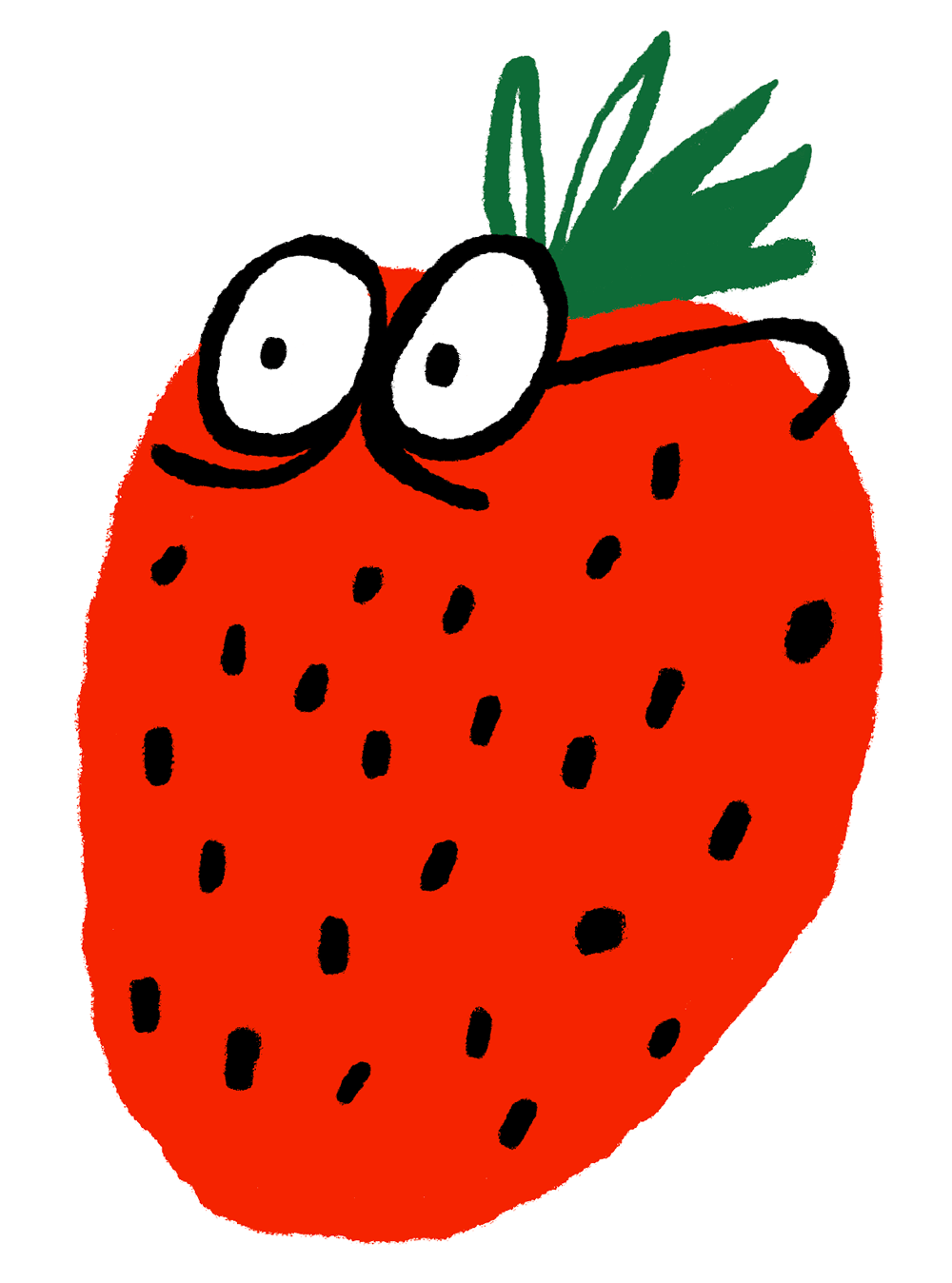
illustration of a strawberry with eyes

In letzter Zeit trinke ich Unmengen an Wasser, in der Hoffnung, davon wunderschöne Haut zu bekommen. Oft erschrecke ich, wenn ich in den Spiegel schaue. Nicht, weil ich mich so hässlich fände, sondern einfach, weil die Haut bei genauem Hinsehen mehr gezeichnet ist, als sie es mit 29 sein sollte. Meine Augenbrauen haben keine besonders markante oder männliche Ausprägung. Die große, kantige Nase ist fleckig und von tiefen Poren übersäht, wie eine Erdbeere. Sie leuchtet rot. Die Augen fallen nach innen, die Haut unter ihnen liegt da wie ein dunkler See. Ich sehe ständig müde aus (oft bin ich es auch, ehrlich gesagt).

Vor einer Weile habe ich mir bei Douglas Consealer gekauft, um gegen diese Augenringe anzukämpfen, aber es fühlt sich nicht richtig an; ich kann diese Müdigkeit nicht einfach übermalen und vergessen. Außerdem bin ich nicht sonderlich begabt, was Makeup angeht; ständig sieht man Konturen und Farbflecken und kleine Makeup-Partikel. Aus Verzweiflung trage ich ein spezielles Gel auf, das in Zukunft Falten um meine Augenwinkel vermeiden soll, aber als ich es A. anbiete, sagt er, er brauche das nicht, denn wenn es zu schlimm werde mit den Falten, lasse er sie sowieso mit Botox aufspritzen. Finde ich plausibel, werde ich auch so machen.

Auch die Idee, meine Nase korrigieren zu lassen, flammt wieder auf – ich finde, 30 ist ein gutes Alter, um das noch anzugehen; viel später wäre es vermutlich zu spät. Vielleicht fange ich an, ein wenig Geld dafür auf die Seite zu legen. Es wäre außerdem ein gutes Training, um davon abzukommen, ständig nur über die Meinung der anderen zu grübeln. Ich bin mir sicher, alle fänden mich schöner und begehrenswerter und seriöser, wenn ich nicht so eine riesige rote Erdbeernase hätte. Andererseits: Vielleicht reicht auch einfach ein Face Filter; Schönheit passiert ja sowieso hauptsächlich online heute. Den bräuchte ich dann aber auch noch für meinen Spiegel.

022021: The Sound of 7 o’Clock

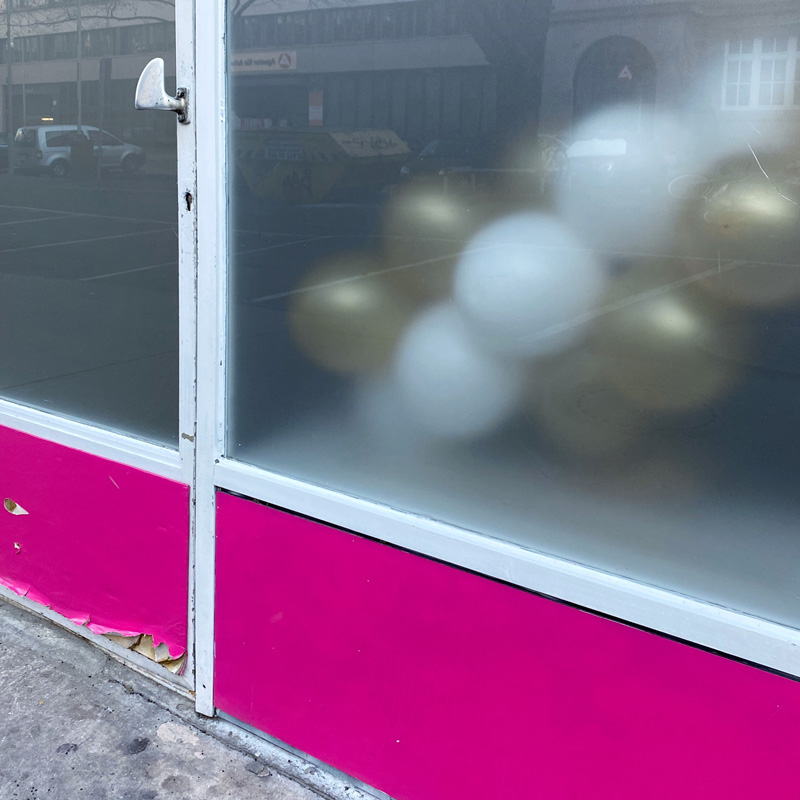
Photo of balloons behind a transulcent window

Almost one year ago, in April 2020: I’m sitting in my reading chair at the window, the iPad on my lap, flipping through a New Yorker issue. David Remnick’s comment on the city’s situation, overwhelmed by the chaos the pandemic had been causing. He describes how the city applauds the essential workers at 7pm every evening (one year later, this feels even more like a farce). I cry over the text, it’s a lot. In April 2020, everything is a lot.

12 months later, we’re still here. The applause silenced, obviously. My routines, like reading magazines before work, also fizzled out. The home office gym classes, the Instagram live dances, the eagerness to cook something new – it all got swallowed by commonplace. The internet, a place I was always happy to spend time, also got boring: The dances have inhabited Instagram, too, and Twitter is overshadowed by arguments and horrific stories, eating up my soul. Paul Bokowski puts it into the right words (I quickly translated): “[…] It may be vital for me to strive for less psychological toxicity. That is, to do something that actually goes against my nature: to deliberately close my eyes. Not from the problem itself, but from its multimedia symptoms. […] The only thing that keeps me happy these days is reading and writing.”

✳︎ ✳︎ ✳︎

On words. As much as I like design as a practice, I often struggle talking about it. I want to describe a certain phenomenon, but cannot find the right term for it. Recently, Malte pointed me to Evan Collin’s are.na boards – his (mostly architectural) research provides words for everything! For example: Utopian Scholastic, Gen-X Corporate or The Global Village Coffeehouse (you’ll know it when you see it).

Another term I encountered and liked: Corporate Memphis! Author and designer Rachel Hawley analyzed the illustration style we’ve all seen and internalized during the past years of using digital services: oddly-shaped humans with exaggerated limbs, roller-skates and cheerful colors. Read about how this style is made-to-scale to tell a corporate fairy tale about big tech companies, and how it might evolve in the future.

What else? I’ve been blogging during the past months (mainly in German). I wrote about the sky, about oysters, about my hands, and about the the guy who moved into the ground-floor apartment.

✳︎ ✳︎ ✳︎

Quietly, this little e-mail dispatch turned 5 years old. Thanks for reading along! You can find the first issue from 2016 here, but I rather recommend you last year’s letter on temperature guns. In it I wrote: “a lot of things just feel a bit weird right now, right?” The right now part turns 12 months these days, and well, it’s still a lot. But at least we’ve managed it through the dark winter, so let’s stay positive. What other options do we have?

(If you enjoy content like this: I send it out as a (irregular) monthly newsletter called Christel’s CornerSign up for it here.)

Vier Texte über Austern

Image of an oyster

1 — Als Kind war ich besessen von Schalentieren. Nicht davon, sie zu essen, sondern von ihrer Form, ihrem Material, ihrem Mythos. Einmal kam mein Vater von einer Dienstreise zurück und brachte mir die Schalen echter Austern mit. Nur für mich habe er sie gegessen! In dem Moment war ich zwar begeistert, die von ihm aufgebrachte Überwindung war mir aber nicht ganz klar. Doch jedes Mal, wenn ich heute daran denke, wächst meine Wertschätzung für diese Geste.

2 — Bei einem Spaziergang auf der Friedrichstraße biegen wir, suchend nach einem Platz zum Sitzen, in eine Seitenstraße ein. Alle Geschäfte haben geschlossen, aber vor dem Restaurant Austernbank gibt es, na ja, eine Bank. Zufrieden lassen wir uns nieder, und erst nach einer Weile merken wir: Die oberen Ablagen der Bank-Konstruktion sind komplett mit leeren, toten Austern gefüllt. Als Kind wäre ich ausgeflippt vor Freude – heute fühlt sich diese Dekoration irgendwie nicht ganz richtig an.

3 — Als Freund der großen Geste suche ich stets nach den glanzvollen Momenten im Alltag. Mein Tipp: Eine Tomate lässt sich ähnlich theatralisch genießen wie eine Auster! Einfach eine große Tomate halbieren, eine Hälfte auf den Fingern platzieren, mit Salz bestreuen, und zum Mund führen. Dann mit gespitzten Lippen das Fruchtfleisch aussaugen, und dabei genussvoll schmatzen. Dazu ein Glas Sekt, köstlich. Fleischtomaten – Die Austern des Fußvolks!

4 — Austern sind mir nix. Zu schleimig, zu lebendig, und auch zu dekadent. Aber anlässlich meines Geburtstags will ich mir die Festlichkeit ein wenig vorspielen, und wir bestellen in einem schicken Restaurant Austern. Das Getue gefällt mir – wie sie serviert werden, wie man sie mit Soße oder Zitrone beträufelt. Aber schmecken tun sie mir nicht. Ich erinnere mich wieder an meinen Vater und seine Aufopferung, nur für meine merkwürdig kindliche Begeisterung.

Der Himmel, heute

Die Stadt schläft noch; unberührt spannt sich der Himmel über uns auf. Die Sonne erleuchtet die gelbe Hauswand gegenüber, und ich muss die Augen zusammenkneifen, wenn ich meine Blicke nach oben schweifen lasse. Aber es lohnt sich. Alles ist ganz ruhig da oben. Hell und blau liegt er da, der Himmel. Nur an den Rändern ein paar Wolkenflecken und Kondensstreifen. Er sieht einladend aus. Als lohnte es sich, heute ein paar Schritte unter ihm zu gehen.

Im Erdgeschoss

In die Erdgeschosswohnung im Nachbarhaus ist jemand eingezogen. Lange stand sie leer – im Erdgeschoss wohnen ist in einer Großstadt ziemlich unattraktiv. Ständig laufen hier sehr viele verschiedene Leute vorbei, alle sind neugierig, viele bestimmt auch frech. Ich stelle es mir stressig vor.

Aber nun wohnt da jemand. Das Licht ist immer an. Gleißend weiß beleuchtet eine LED-Glühbirne das Zimmer zur Straße. Nichts Wohnliches strahlt dieses Licht aus. Aber es macht die spartanische Einrichtung sichtbar: Ein lustlos bezogenes Bett steht in der einen Ecke. In der anderen ist ein kleiner weißer Tisch mit einem wackelig aussehenden Plastikstuhl platziert. Auf ihm sitzt immer ein Mann, vielleicht Ende 30. Er schaut in sein Handy. Neben ihm: ein Gummibaum, und manchmal ein Wäscheständer.

Es ist nicht so, als hätte ich lange neugierig durchs Fenster in die Wohnung gestarrt. Aber das ist eben die Sache bei hell erleuchteten Erdgeschosswohnungen: Wer daran vorbei läuft, schaut zwangsweise auch hinein. Das weiße Licht irritiert mich jedes Mal. Wie kann man sich gerne in diesem Raum aufhalten? Aber immer wenn mein Blick dann auf die Person fällt, und auf die spärlichen Einrichtungsgegenstände, denke ich: Es sieht gar nicht nach wohnen oder nach aufhalten aus. Eher nach aushalten. Der Mann und die Gegenstände, dicht an die Wände des Zimmers gedrängt, sitzen die Situation nur so aus – bis ich und meine Blicke endlich an der Wohnung vorbei gegangen sind.

082020: We’ll be Alright When I Rub My Eyes

December 2020

On magic: It’s March 2020 and I’m on a video call with a friend. We’re all new to this whole stay-at-home situation, and she had offered to lay her Tarot cards for me. She’s using playing cards of Magic: The Gathering, just to spice things up a bit. The cards tell me about the general situation (Silent Attendant: “The Answer to life should never be death; it should always be more life, wrapped tight around us like precious silks”), they give precise recommendations (The Bandage: “Prevent the next damage that would be dealt to any target”), and conclude a possible outcome of it all (The Arcane Laboratory: “It soon became obvious that some experiments were best overseen by fireproof teachers”).

On waves: Admittedly, I do not believe in Tarot, but as we were (and still are) facing months of uncertainty, I enjoyed its randomness. There’s always something to get out of it—if you just read between the lines. So I’m digging into the year: Every other month, I got overwhelmed with pandemic anxiety, but over time, dealing with it became easier. The constant decision-making, weighing reason with facts, desires and relationships was probably the most exhausting part.

While it was widely accepted to be stressed and anxious during the first wave, it feels less tolerated in the current situation: Everybody needs to have their shit together by now. I don’t like that. I liked that everybody talked about how they’re feeling all the time; admitting exhaustion, fears and uncertainty. I want that to stay even after Corona. We will all get better at expressing it.

✳︎ ✳︎ ✳︎

I listened to a lot of Charli XCX this year. Here’s an interesting introduction to Hyperpop (if you were wondering what all the Tumblr Vaporwave kids were up to now). A plan for next year is to actually tidy up my Spotify playlists—for now, you can tune in to my public playlist. This letter’s headline is from my song of the year: Rub My Eyes by Hearts Hearts.

A book that I keep thinking about is Ottessa Moshfegh’s “My Year of Rest and Relaxation.” I read it in January and it somehow set the scene for the months to come. Follow my readings on Goodreads, if you like.

As people are talking about digital gardens and mourn the days of personal online publishing, I am happy to point out: Weblogs do still exist! For example: Gabriel, Nina, Marcel, LisaAndreas.

✳︎ ✳︎ ✳︎

For the new year, I encourage you to read between the lines. Read between anything! There’s always stuff to carve out. And for now: Let’s stay at home as much as we can, to prevent the next damage that would be dealt to any target. Another year, another round, make it count.

(If you enjoy content like this: I send it out as a (irregular) monthly newsletter called Christel’s CornerSign up for it here.)