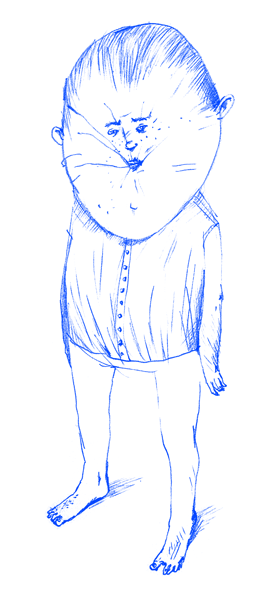
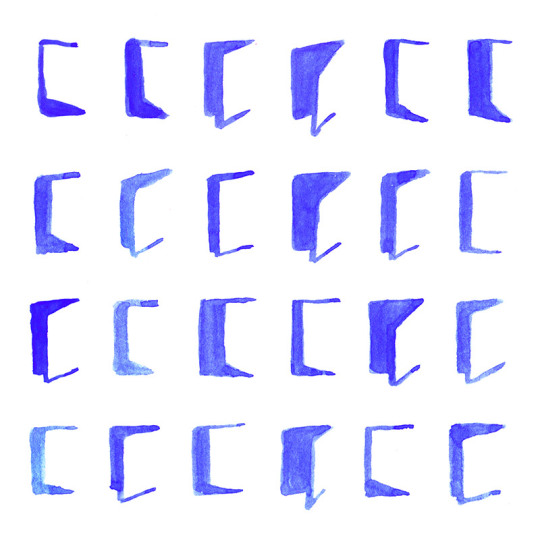
Ich habe mir vorgenommen, zukünftig mehr auf meinen Gesichtsausdruck zu achten. Unter großer Anstrengung neige ich dazu, die Augenbrauen angespannt nach oben zu ziehen: beim Radfahren im Gegenwind, beim Justieren von Buchstaben, beim Drehen einer Pirouette. Selbst beim Zeichnen eines Gesichts nehme ich unweigerlich den Ausdruck der zu Papier gebrachten Figur an: angespannt, kreischend, fröhlich oder zu Tode bestürzt spiegelt sich ihr Antlitz in meinem.
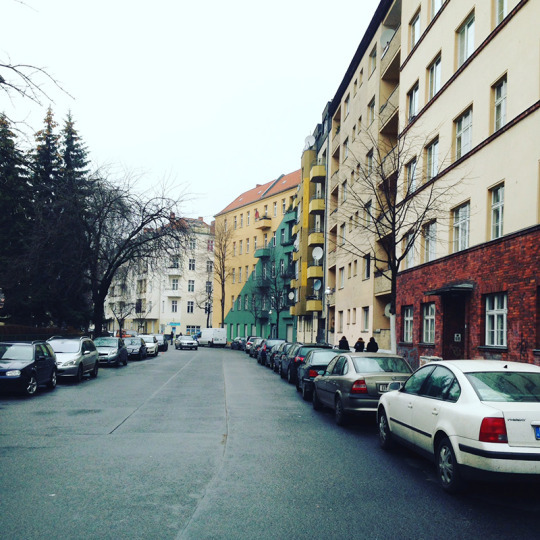
It’s February 29, shortly after 11pm. I’m sitting in Berlin Prenzlauer Berg, on an old but comfortable IKEA sofa. This day was a rare one. I hope you made it count!
So. February. I changed my phone’s passcode in the beginning of this month. I’ve had the same four-digit-code for at least four years, and as my phone does not support any form of biometric identification, I need to keep typing that code to access my device. What I was not aware of though was the strength with which this code had been woven into my muscle memory. After 29 days, and over hundreds of unlocks, my thumb still is not quite able to perform the new numeric array. The struggle is real!
Sticking with phones (topic-wise): The new qz app got quite some attention in our office slack and in my twitter stream. Basically, it’s a robot that texts you the news. In a messenger-like interface, it provides short bits of information, and offers either questions to learn more on the topic, a link for further reading, or another piece of content. While the tone of voice is friendly and human-like, I only used it once for curiosity reasons, and never again.
What I started using more during the last month was Snapchat. We all struggled in wrapping our head around the confusing, basically also non-existing interface (swipe here, tap there, accidentally send an ugly selfie to a stranger and close the app in frustration), but I started liking it after a while. It’s nice to get so close to people’s lives, almost observing them, letting them carry you around their everyday life through the phone’s front-camera. While there are some really good snapchatters like my friend Eva (? hurraeva) or Cecilia (? motionandgrowth), who only use it when they actually have a relevant story to tell, it’s mainly a channel for nonsense and gibberish, which, honestly, is quite nice after a long day of work. Let the others do the talking. ? christowski1 (lamest nick name in the history of nick names.)
His death earlier this month truly saddened me. I have been in awe of his work ever since I started writing; his way of telling stories and embracing life‘s oddities has been a true inspiration during my last ten years (I wrote about one of his readings nine years ago on this blog). When he passed away, so many beautiful, admiring and sad articles had been published, and they got me thinking: How do we appreaciate someone’s existance while they are still with us, without being overly emotional or pathetic? How do we let them know we appreciate the work they do, and the time they share with us? I find that hard sometimes, oftentimes.
Roger Willemsen wrote a quarterly column called Willemsens Jahreszeiten in ZEIT Magazin. Here’s the archive. Even though there won’t be a new column this spring, we have one thing to look forward to in March: Daylight saving time. “Es wird Frühling!”
Kastanienallee – Menschen laufen mir in Paaren entgegen. Ich prüfe: sie rennen nicht, sie scheinen vor keiner konkreten Gefahr zu flüchten. Ich trete mein Fahrrad langsam die Straße entlang: immer mehr Menschen, der erste Polizeibus. Ein sanftes Dröhnen in der Luft: dann das erste Feuerwehrauto, und da merke ich es am Geruch: ein Brand. Die Leute im Restaurant gegenüber blicken aus den Fenstern zur Straße hin: Eine Menschenmenge entfernt sich. Mehr Polizei, mehr Feuerwehr, ich steuere auf die Kreuzung zu. Die Scheiben der Bar sind mit grauem Rauch bedeckt. Aus der Eingangstür an der Hausecke qualmt es Wolken nach außen, die Feuerwehr beginnt bedacht ihre Arbeit. Ich traue mich nicht anzuhalten: Anhalten macht mich zum Zuschauer, Zuschauer stören in solch einer Situation.
Aber kaum jemand ist hier. Die Menschen spazieren, die Feuerwehr geht entspannt ihrer Arbeit nach: Sie tragen ihre Schutzkleidung, sie tragen den Schlauch. Ich blicke am Gebäude nach oben: Ist noch jemand drin? Warum herrscht hier keine Panik? Vereinzelt brennt Licht in den Wohnungen, doch es scheint alles leer zu sein. Die Bar qualmt weiter. Ich biege in die Seitenstraße.
Eine Woche später fahre ich wieder an der Hausecke vorbei – es ist spät am Abend. Mein Blick huscht an den großen Scheiben der Bar entlang: Die Stühle sind hochgestellt, und auf den Tischen stehen in kleinen Vasen die ersten Tulpen des Jahres.
One of the hardest months of the year is coming to an end. The darkness of winter is eating me up, I want to hide inside and just wait till it’s over. Neukölln is not a pleasurable place to be during the winter months – I hate spending time outside after 5pm, which leads to a lot of home office days and me temporarily moving to my friend’s home in Prenzlauer Berg.
Something that helped my dark mood and misanthropy: Avoiding public transport. I stepped up the cycling game, buying thermal underwear, rain clothes, and made a DIY ass-saver (who would buy a bicycle without mud guards?!). When it was -10°C, my most important purchase was a pair of really expensive Roeckl gloves, which I lost one week later. By then, January was well-disposed; temperatures almost spring-like.
Also purchased were too many books this month: Brian Christian’s The Most Human Human, Sarah Ruhl’s 100 Essays I Don’t Have Time to Write, and a couple of novels I want to read this year. The latter – 100 Essays – is just a pleasure to read because it consists of really short, really fun musings on theatre. I tend to buy a lot of books and never make it past the first 80 pages, and for a long time I thought I am just not the smart book person I wanted to be. In fact, my attention span is very short when it comes to reading, but oftentimes, I also just choose the wrong ones. I had maybe two or three books last year that I read in one go, for example Mr. Penumbra’s 24-Hour Bookstore: A fantastic novel with simply the right amount of zeitgeist and magic. I bought it at The Curious Fox in Neukölln, which you should pay a visit if you’re into english books.
Other findings of joy this month: This set by Robag Whrume; I did not listen to anything else. Elisabeth’s weekly writing, especially this text after the first week of January. I fell in love with the drawings and paintings of Sholem Krishtalka: An intense capturing of the city and queer clubbing scene in Berlin.
Neulich stand ich an meinem Fenster und blickte auf die Straße; es war einer der ersten Abende, an denen die Stadt mit dicken Schneeflocken bedeckt wurde. Und ich schaute hinunter und hinaus und ich dachte, eigentlich ist es doch ganz friedlich: Diese Stille, die der Schnee mitbringt, das heimliche Knirschen, Menschen, die ihre Autos frei schaufeln. Ich las die Anekdote eines jungen Mannes, der Geflüchteten Deutsch beibringt: wie die Konzentration dahin war, als die Menschen teilweise den allerersten Schnee ihres Lebens gesehen haben – da dachte ich, eigentlich ist es alles ganz friedlich.
An diese Magie des ersten Schnees erinnere ich mich von früher: Schneefrei, weil der Schulbus nicht fährt! Heute ärgern wir uns über die Straßenbahn, die ausfällt, denn Bürofrei gibt es nicht als Erwachsener. Iglus bauen, wenn der Schnee richtig schön pappig ist! Heute? Der Mann, der sein Auto vom Schnee befreit (der, den ich eben noch verträumt dabei beobachtet habe) flucht, und ich finde es auch nicht so toll, das Rad wegen Glätte und Matsch zu Hause lassen zu müssen. Das Rodeln auf dem Berg am Stadtrand! Und heute gehen eigentlich nur noch die Leute rodeln, die selbst schon Kinder haben.
In 24 Tagen geht die Sonne wieder um 7 Uhr 30 oder früher auf (11. Februar). In 40 Tagen wird endlich die Zeit umgestellt: Die Sonne geht erst um 18 Uhr 30 oder später unter (26. März). In zweieinhalb Monaten können wir vermutlich die Winterjacke durch die Übergangsjacke ersetzen (1. April). Bis dahin schaue ich mir die Welt versteckt durch den schmalen Sichtschlitz meiner Winterjacke an.
Before you start, make sure that you follow this guide at an even time: Wait until it’s half three, or eight, or maybe quarter to ten.
Stand in front of your desk. Look at it with a judging eye, and after a few seconds, throw away everything you don’t need. Put all open letters and documents in their respective folders and drawers.
Then, look at what’s left: Everything irrelevant gone? Start spreading out all remaining objects evenly on the table; as if their position needed to balance out the tabletop. Afterwards, adjust all objects to a specific angle.
Sit down in front of your neatly arranged desk. Look at your computer, take a deep breath, and switch it on. After the operating system is accessible, navigate to Finder → View → Show View Options. This opens a narrow, floating window with settings.
For icon size, chose 16 × 16. Select the maximum grid size, and for the label position, select “right”.
Close the little floating window, then close your laptop. Take a deep breath, and lastly, close your eyes.
In den letzten Wochen, die sich vor den Tag meines Geburtstags reihten, geriet ich in Panik. Torschlusspanik: Jetzt, so schien es mir, wäre die letzte Chance zum großen Wurf: Es schließen sich die Türen zu neuen Aufgaben; Türen zu neuen Bekannten; die letzte Möglichkeit, sich nochmal aufrichtig zu entschuldigen, oder die Chance, mit einer Entscheidung in ein anderes, noch besseres Leben zu gelangen. Die letzte Möglichkeit, besser zu werden.
All das schien mir zu entrinnen. Dabei hatte ich vor einigen Monaten erst die durchaus reizende Gelegenheit, für einige Monate in die USA zu gehen, mit gutem Gewissen an mir vorbei ziehen lassen, ja, sie sogar wissentlich weitergeschickt. Alle meine Freunde gehen auf die 30 zu, oder sind schon mitten drin, und man belächelt mich: 24, das ist doch kein Alter. Sie denken über den Kauf von Wohnungen in der Stadt nach, über Rentenversicherungen und Nachwuchs. Ich habe es dieses Jahr gerade mal geschafft, mir eine Haftpflichtversicherung zuzulegen. 24, wie soll in den Rest noch ein Master reinpassen, eine Weltreise, ein Sabbatical, eine neue Wohnung, mal eine andere Stadt, wo ist da noch Platz für einen besseren Job, wo ich doch den Besten schon habe.
Die Sommer haben nur ein paar wenige Monate. Und gleichzeitig vergehen die Jahre, und Beziehungen passieren, fangen an und beenden sich, und mein Umfeld scheint nicht zu altern. Alle sind einfach da. Nur mir rennt die Zeit davon. Mir ist klar: die Chance auf Änderung ist doch immer vorhanden. Vielleicht sehe ich mir an, wie bequem ich werde, vielleicht sogar faul; wie schwer mir das Fällen von Entscheidungen fällt, und am Ende bleibt es so wie es ist, und dann ist der Zug abgefahren, und ich denke, ich hab nichts gemacht aus meinem Leben.