text

Online-Shopping gegen Schreibblockaden

Beginnen wir mit einem Paradoxon: Ich bin kein Freund von Amazon. Um die schlechten Arbeitsbedingungen innerhalb des Konzerns weiß ich bescheid, und ich möchte weiterhin in einer Welt leben, in der Buchläden existieren (deswegen kaufe ich dort auch keine Bücher).

Was aber den restlichen Einzelhandel betrifft, werde ich jedes Mal aufs Neue enttäuscht: Der Fahrradladen führt die gängigsten Produkte nicht, man ist unfreundlich, das Personal im Kaufhaus kennt weder die eigene Produktpalette noch will es die Käufer beraten. Da lese ich lieber eine eingekaufte Produktrezension auf Amazon. Oder, noch besser: Ich schreibe meine eigenen. Hier eine Auswahl meiner letzten Einkäufe:
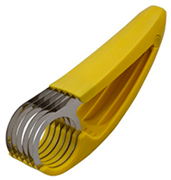
Bananza Bananenschneider

Der Bananza Bananenschneider ist eine herrliche Überraschung für Freunde und Bananen-Liebhaber! Er eignet sich hervorragend als lustiges Geschenk, und liefert gleichzeitig vernünftige Ergebnisse beim Zerkleinern von Bananen. Das Design wirkt zwar auf den ersten Blick abschreckend, aber das Gerät liegt gut in der Hand, und die Klingen zerteilen die Frucht in saubere Stücke. Absolute Kaufempfehlung!
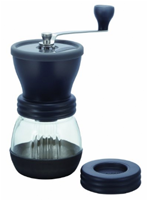
Hario Handkaffeemühle

Im Nachhinein ärgere ich mich, dass ich mal wieder auf eins dieser Hipster-Produkte herein gefallen bin. Die Marke Hario versorgt die Kaffee-Enthusiasten der Welt mit entsprechendem Werkzeug, das sich allerdings nicht für jeden eignet.

Man braucht durchaus eine Weile, um die nötige Menge an Bohnen für eine Tasse Kaffee zu mahlen – und wer kein absoluter Feinschmecker ist, bemerkt den Unterschied zwischen handgemahlenen und maschinengemahlenen Bohnen definitiv nicht. Daher: Kauft dieses Ding nur, wenn ihr Spaß am Kurbeln und einen SEHR distinguierten Kaffeeanspruch habt. Nix für Kaffee-Normalos.

Bosch MFQ3540 Handrührer

Ohne Zweifel würde ich den Bosch MFQ3540 Handrührer als besten Handrührer bezeichnen, den ich jemals besessen habe! Die gewohnte Qualität von Bosch wird hier eindeutig spürbar. Das Gerät ist gut verarbeitet – belastbarer Kunststoff, leicht abwischbar, und es liegt gut in der Hand.

Die Power, die der kleine Küchenhelfer mit sich bringt, ist beindruckend. Auch zähen Teig knetet er ohne Mühen. Doch das beste Feature ist ohne Frage der integrierte Pürierstab! Zwei wichtige Haushaltsgeräte wurden hier geschickt kombiniert, ohne Leistungseinbuße in Kauf nehmen zu müssen. Der Pürierstab wird in eine verschließbare Öffnung eingeklickt und püriert, mit gewohnter Kraft, auch harte Obststücke und gefrorene Beeren. Absolute Kaufempfehlung – Ich habe ihn hier seit einem Jahr im Einsatz und möchte meinen Bosch MFQ3540 Handrührer bei der Küchenarbeit nicht mehr missen!

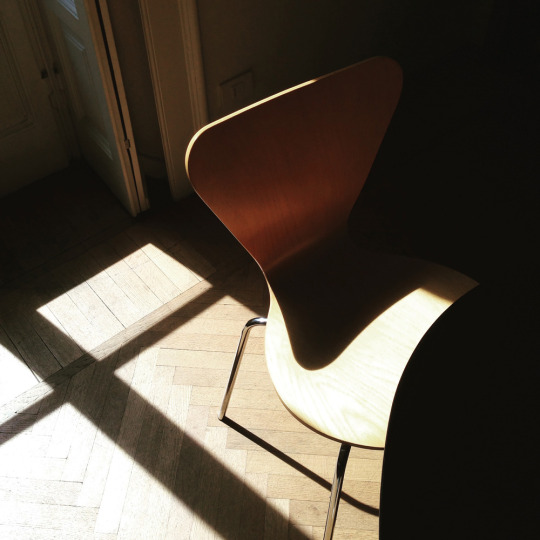
Sommer in Berlin

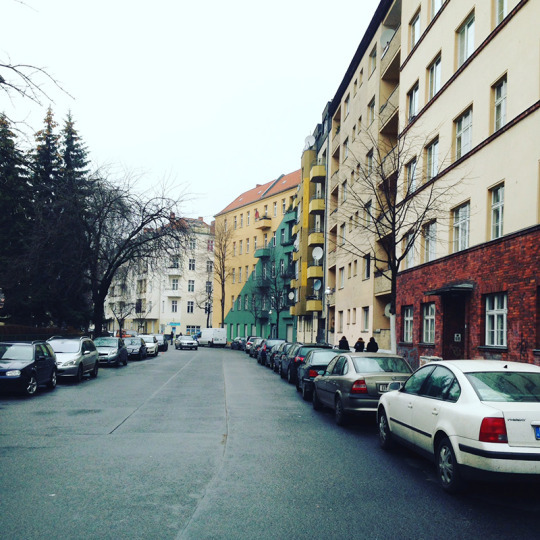
An der Ampel steht ein hagerer junger Mann im Unterhemd, über die Schultern eine dünne Lederjacke geworfen. Seine kleine Freundin hebt die linke Seite der Jacke an, steckt ihren Kopf unter die Achsel des Mannes, verweilt kurz – und dreht sich eingeschnappt weg. Die Ampel wird grün. Sommer in Berlin.

May: Designers, Friends, and Amateurs

Or: This month basically was as gloomy as a song by The National.

image

There is one tag line by Frank Chimero, which I often use as a personal excuse for everything that goes wrong in my life. “Professional Designer, Amateur Human”. This works perfectly for the past month: May.

It’s the moment in which I am sitting on the concrete stairs in front of Berlin’s “Haus der Kulturen der Welt”, a beautiful location right inside the city’s biggest park. The annual TYPO design conference takes place there. And while the conference was a huge success — we as the editorial team wrote over 70 blog posts for all the talks — I am sitting there, on the stairs, under me the silver reflections of the shallow water, and for a brief moment I have the feeling that I am loosing control of my life. It slips away. The moment is short but crisp and clear, and after it, everything seemed different. So I call my friend Eva.

She visited later that month, and as I wrote about how important it is to acknowledge the awesomeness of people who surround us: Eva really is awesome. Talking to her for ten minutes makes me motivated for life, it makes me curious and courageous, and everything seems doable and acceptable. Even if the whole conversation spins around a problem where we both don’t know the solution for: It makes me feel less like an amateur. Thanks for that.

Three other great people are Roman, Sebastian and Beate, who’s documentary about young philosophers was screened for the first time in Berlin last month. I lived with Roman when they started editing the material back in 2014 (!), so I knew bits and pieces. But the final movie turned out really wonderful. It makes the process of thinking visible, and manages to not be boring for a single second. The audience at the screening were mostly philosophy and cultural science students, and I learned: philosophy students ask a lot of questions. One of them wanted to know about the initial motivation to make the movie. I loved Sebastian’s reply: “I asked myself: Which movie do I have to make, that everyone else would simply fuck up?”

This was a key moment for me. A moment about relevance in creative work. A key to making purposeful things. There is so much design in this world that is useless, and so many valuable ideas that are so badly designed. Maybe because of all the amateurs. Sorry, this newsletter was messy, but so was May. Hopefully June will be better.

April: Palaces, a trip to Milan, and one decade

image

This blog turned 10 years in April. What the?! It started out as a crappy Blogger blog called “Blogski Christowski”, then I moved it to WordPress, and eventually ended up on Tumblr, because I once thought mobile blogging would become a thing. It didn’t though. Micro-blogging became a thing, and all the blogs I used to enjoy as a teenager disappeared. The only things people really blog about these days are green smoothies, fashion and the death of blogging. Everything else is on Twitter, Pinterest, Instagram, you name it. But I like it here. I like the old school flair the word “blog” pours. And I am glad some of you are still around. Thanks for that.

April was packed: I went to Milan for the first time. It’s a nice city (even though my friends mentioned through-out the trip how different Milan was to other Italian cities). What I don’t really understand is Italy’s coffee culture: You enter a café, order at one counter and pay (even if you haven’t decided for your type of croissant yet), then walk to another counter and choose the croissant, and finally order again – at another counter – the coffee you initially ordered. You have to drink it while standing in everyone’s way though, because if you sit down, the coffee gets really expensive. I don’t know. If you’re used to Berlin’s artisanal coffee-brewing craftsmanship, Italian coffee simply is nothing special.

We went to the furniture fair, Salone di Mobile, but realized that 24 halls full of chairs and brass side tables are too much to handle. We mainly were fascinated by the first halls; the “Classics”. Everything there was a bit too much (understatement of the year): Gold, marble, heavy curtains, a champaign bar that electrically rises out of a palatial wooden table. There is so much luxury in the world that we can’t even imagine.

More Milan: 150 years after Da Vinci finished his gigantic and famous mural “The Last Supper”, someone cut a door into it, and Jesus’ feet were gone. Like, who would do that? In German museums, you are likely to be expelled by the museum attendant if you don’t keep a safety distance of two meters from an exhibit.

Three more thoughts that popped up last month:

Always leave with the mindset of leaving for good. If you are a nervous traveller, do not think about the fact that you have to go back again. That thought pollutes the whole trip. Travel and think, Ok, I’m going to stay here.

Concerts are poems, really. I went to see Akua Naru, without knowing her, and I was sure that her music wasn’t really my kind of music. But her show was brilliant: A mixture of rap, jazz, mellow and loud, connected by a well-crafted narrative. Which is really the most important thing for a concert (and the reason why I hardly go to any concerts anymore).

All palaces are temporary palaces.

April was not only busy, but also decision-heavy. I wondered: Can decisions really be wrong if you decide to always make the best out of it? May will show us. I’m off to catch some sun now.

On Designing Books Well

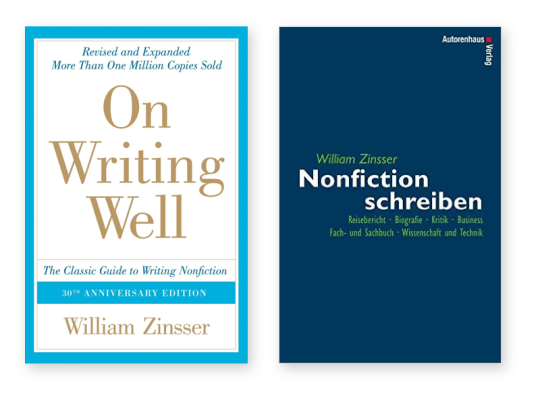
Ein schönes Beispiel dafür, warum ich etwa 80 Prozent der Bücher des vergangenen Jahres auf englisch gelesen habe: Links im Bild die englische Originalausgabe von William Zinssers “On Writing Well” – rechts daneben die deutsche Fassung des Autorenhaus Verlags.

Zinssers vielfach überarbeiteter Ratgeber rund ums Schreiben hing schon seit Monaten auf auf meiner Amazon-Wunschliste. Die Bestellung der englischen Ausgabe hatte im örtlichen Buchladen eine Lieferzeit von zwei Wochen. Natürlich hätte ich einfach auf ›Bestellen‹ in meiner Jackentasche klicken können – aber man will ja den Einzelhandel unterstützen, und so bestellte ich die deutsche Ausgabe, mit dem tristesten Cover, das man sich vorstellen kann. In dem Buch geht es um Persönlichkeit in der Sprache bei Sachtexten! Dabei ist dem deutschen Autorenhaus Verlag wohl die Persönlichkeit der Umschlaggestaltung abhanden gekommen.

February: Muscle Memory, Snapchat, and Roger.

image

It’s February 29, shortly after 11pm. I’m sitting in Berlin Prenzlauer Berg, on an old but comfortable IKEA sofa. This day was a rare one. I hope you made it count!

So. February. I changed my phone’s passcode in the beginning of this month. I’ve had the same four-digit-code for at least four years, and as my phone does not support any form of biometric identification, I need to keep typing that code to access my device. What I was not aware of though was the strength with which this code had been woven into my muscle memory. After 29 days, and over hundreds of unlocks, my thumb still is not quite able to perform the new numeric array. The struggle is real!

Sticking with phones (topic-wise): The new qz app got quite some attention in our office slack and in my twitter stream. Basically, it’s a robot that texts you the news. In a messenger-like interface, it provides short bits of information, and offers either questions to learn more on the topic, a link for further reading, or another piece of content. While the tone of voice is friendly and human-like, I only used it once for curiosity reasons, and never again.

What I started using more during the last month was Snapchat. We all struggled in wrapping our head around the confusing, basically also non-existing interface (swipe here, tap there, accidentally send an ugly selfie to a stranger and close the app in frustration), but I started liking it after a while. It’s nice to get so close to people’s lives, almost observing them, letting them carry you around their everyday life through the phone’s front-camera. While there are some really good snapchatters like my friend Eva (? hurraeva) or Cecilia (? motionandgrowth), who only use it when they actually have a relevant story to tell, it’s mainly a channel for nonsense and gibberish, which, honestly, is quite nice after a long day of work. Let the others do the talking. ? christowski1 (lamest nick name in the history of nick names.)

Also nice after work: swimming. Listening to this podcast by Marcel and Eva (it’s in German). Reading through this beautiful and in-depth article by Robin about a new approach on web typography. Watching every interview and TV show on YouTube that has Roger Willemsen as host or guest.

His death earlier this month truly saddened me. I have been in awe of his work ever since I started writing; his way of telling stories and embracing life‘s oddities has been a true inspiration during my last ten years (I wrote about one of his readings nine years ago on this blog). When he passed away, so many beautiful, admiring and sad articles had been published, and they got me thinking: How do we appreaciate someone’s existance while they are still with us, without being overly emotional or pathetic? How do we let them know we appreciate the work they do, and the time they share with us? I find that hard sometimes, oftentimes.

Roger Willemsen wrote a quarterly column called Willemsens Jahreszeiten in ZEIT Magazin. Here’s the archive. Even though there won’t be a new column this spring, we have one thing to look forward to in March: Daylight saving time. “Es wird Frühling!”

Der Brand:

Kastanienallee – Menschen laufen mir in Paaren entgegen. Ich prüfe: sie rennen nicht, sie scheinen vor keiner konkreten Gefahr zu flüchten. Ich trete mein Fahrrad langsam die Straße entlang: immer mehr Menschen, der erste Polizeibus. Ein sanftes Dröhnen in der Luft: dann das erste Feuerwehrauto, und da merke ich es am Geruch: ein Brand. Die Leute im Restaurant gegenüber blicken aus den Fenstern zur Straße hin: Eine Menschenmenge entfernt sich. Mehr Polizei, mehr Feuerwehr, ich steuere auf die Kreuzung zu. Die Scheiben der Bar sind mit grauem Rauch bedeckt. Aus der Eingangstür an der Hausecke qualmt es Wolken nach außen, die Feuerwehr beginnt bedacht ihre Arbeit. Ich traue mich nicht anzuhalten: Anhalten macht mich zum Zuschauer, Zuschauer stören in solch einer Situation.

Aber kaum jemand ist hier. Die Menschen spazieren, die Feuerwehr geht entspannt ihrer Arbeit nach: Sie tragen ihre Schutzkleidung, sie tragen den Schlauch. Ich blicke am Gebäude nach oben: Ist noch jemand drin? Warum herrscht hier keine Panik? Vereinzelt brennt Licht in den Wohnungen, doch es scheint alles leer zu sein. Die Bar qualmt weiter. Ich biege in die Seitenstraße.

Eine Woche später fahre ich wieder an der Hausecke vorbei – es ist spät am Abend. Mein Blick huscht an den großen Scheiben der Bar entlang: Die Stühle sind hochgestellt, und auf den Tischen stehen in kleinen Vasen die ersten Tulpen des Jahres.