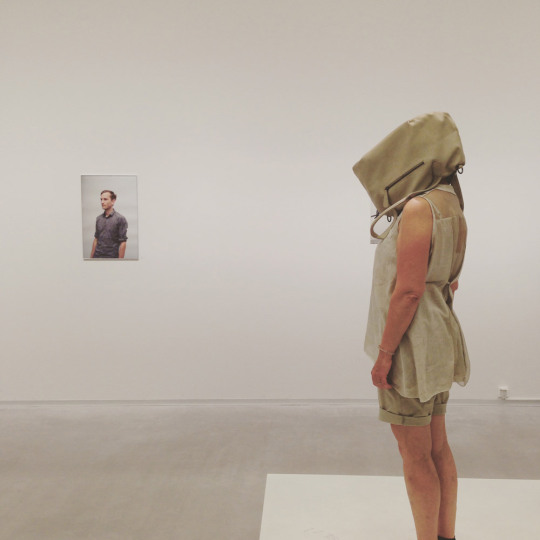
June: Wrong Turns, Echo Chambers, and Appearances

We can’t blame June for the volatile weather conditions. Or, can we? Anyway, it wasn’t only the weather that was turbulent the past month.

When the UK voted for the Brexit, my social networks exploded. Through my colleagues, I mainly know young people in the UK – all between their early twenties and mid-thirties. They all were devastated and frustrated, deeply concerned when the referendum’s result was delivered. The newspapers I read also went head over heels about the vast negative consequences. To me, it seemed so obvious that the UK had voted for the wrong decision, and I couldn’t wrap my head around how this had happened.

During the first days and weeks, I haven’t stumbled upon one single positive aspect about the decision to leave. I read through the comments on the Leave Campaign’s Facebook page, just to get out of my echo chamber (a word I found in this German interview with Miriam Meckel, and I much prefer it to “filter bubble”). It is crazy how we are trapped in this shield of algorithms and precast opinions. It really takes some time and effort to dig through this chamber and grasp some different, unheard voices.

Well, anyway, I did that, but honestly, I did not come across a lot of smart things. A campaign driven by lies, politicians driven by wrong-tracked overzealousness, media driven by populism. Voters driven by the wrong assumptions and untold truths. Eventually, the whole thing reminded me of Platon’s “Allegory of the Cave” – there is so much wisdom and perspective out there, and once you found it, it’s the most shattering process to pass it on. The School of Life YouTube channel has some nice, brief memory brush-ups on philosophy, history and the like. I enjoy watching it while brushing my teeth in the morning, or while having dinner by myself at night.

Unrelated but relevant: This thought came to me while riding the bike down Sonnenallee (not a recommended cycling route), just like epiphanies mainly happen during showers, walks or moments where no pen and paper are available. Anyway, I realized: We, too, are just small — and sometimes not so small — parts of other people’s lives. We jump in, we stay for a while, and in most cases, we leave again. We just make an appearance. And after this, things are free to move on without us.

July marks an important, finalizing month in my current phase of life. The last couple of years were filled with work, so much work, and I truly loved it. But August will be spent traveling (a little bit at least, because I am a horrible traveler), seeing friends and family, buying a proper office chair. We’ll see. But for now: July, some more sun please, and let’s go.
Online-Shopping gegen Schreibblockaden

Beginnen wir mit einem Paradoxon: Ich bin kein Freund von Amazon. Um die schlechten Arbeitsbedingungen innerhalb des Konzerns weiß ich bescheid, und ich möchte weiterhin in einer Welt leben, in der Buchläden existieren (deswegen kaufe ich dort auch keine Bücher).

Was aber den restlichen Einzelhandel betrifft, werde ich jedes Mal aufs Neue enttäuscht: Der Fahrradladen führt die gängigsten Produkte nicht, man ist unfreundlich, das Personal im Kaufhaus kennt weder die eigene Produktpalette noch will es die Käufer beraten. Da lese ich lieber eine eingekaufte Produktrezension auf Amazon. Oder, noch besser: Ich schreibe meine eigenen. Hier eine Auswahl meiner letzten Einkäufe:

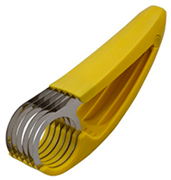
Bananza Bananenschneider

Der Bananza Bananenschneider ist eine herrliche Überraschung für Freunde und Bananen-Liebhaber! Er eignet sich hervorragend als lustiges Geschenk, und liefert gleichzeitig vernünftige Ergebnisse beim Zerkleinern von Bananen. Das Design wirkt zwar auf den ersten Blick abschreckend, aber das Gerät liegt gut in der Hand, und die Klingen zerteilen die Frucht in saubere Stücke. Absolute Kaufempfehlung!

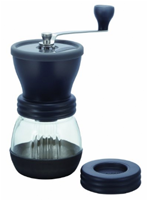
Hario Handkaffeemühle

Im Nachhinein ärgere ich mich, dass ich mal wieder auf eins dieser Hipster-Produkte herein gefallen bin. Die Marke Hario versorgt die Kaffee-Enthusiasten der Welt mit entsprechendem Werkzeug, das sich allerdings nicht für jeden eignet.

Man braucht durchaus eine Weile, um die nötige Menge an Bohnen für eine Tasse Kaffee zu mahlen – und wer kein absoluter Feinschmecker ist, bemerkt den Unterschied zwischen handgemahlenen und maschinengemahlenen Bohnen definitiv nicht. Daher: Kauft dieses Ding nur, wenn ihr Spaß am Kurbeln und einen SEHR distinguierten Kaffeeanspruch habt. Nix für Kaffee-Normalos.

Bosch MFQ3540 Handrührer

Ohne Zweifel würde ich den Bosch MFQ3540 Handrührer als besten Handrührer bezeichnen, den ich jemals besessen habe! Die gewohnte Qualität von Bosch wird hier eindeutig spürbar. Das Gerät ist gut verarbeitet – belastbarer Kunststoff, leicht abwischbar, und es liegt gut in der Hand.

Die Power, die der kleine Küchenhelfer mit sich bringt, ist beindruckend. Auch zähen Teig knetet er ohne Mühen. Doch das beste Feature ist ohne Frage der integrierte Pürierstab! Zwei wichtige Haushaltsgeräte wurden hier geschickt kombiniert, ohne Leistungseinbuße in Kauf nehmen zu müssen. Der Pürierstab wird in eine verschließbare Öffnung eingeklickt und püriert, mit gewohnter Kraft, auch harte Obststücke und gefrorene Beeren. Absolute Kaufempfehlung – Ich habe ihn hier seit einem Jahr im Einsatz und möchte meinen Bosch MFQ3540 Handrührer bei der Küchenarbeit nicht mehr missen!

Sommer in Berlin

An der Ampel steht ein hagerer junger Mann im Unterhemd, über die Schultern eine dünne Lederjacke geworfen. Seine kleine Freundin hebt die linke Seite der Jacke an, steckt ihren Kopf unter die Achsel des Mannes, verweilt kurz – und dreht sich eingeschnappt weg. Die Ampel wird grün. Sommer in Berlin.

May: Designers, Friends, and Amateurs

Or: This month basically was as gloomy as a song by The National.

image

There is one tag line by Frank Chimero, which I often use as a personal excuse for everything that goes wrong in my life. “Professional Designer, Amateur Human”. This works perfectly for the past month: May.

It’s the moment in which I am sitting on the concrete stairs in front of Berlin’s “Haus der Kulturen der Welt”, a beautiful location right inside the city’s biggest park. The annual TYPO design conference takes place there. And while the conference was a huge success — we as the editorial team wrote over 70 blog posts for all the talks — I am sitting there, on the stairs, under me the silver reflections of the shallow water, and for a brief moment I have the feeling that I am loosing control of my life. It slips away. The moment is short but crisp and clear, and after it, everything seemed different. So I call my friend Eva.

She visited later that month, and as I wrote about how important it is to acknowledge the awesomeness of people who surround us: Eva really is awesome. Talking to her for ten minutes makes me motivated for life, it makes me curious and courageous, and everything seems doable and acceptable. Even if the whole conversation spins around a problem where we both don’t know the solution for: It makes me feel less like an amateur. Thanks for that.

Three other great people are Roman, Sebastian and Beate, who’s documentary about young philosophers was screened for the first time in Berlin last month. I lived with Roman when they started editing the material back in 2014 (!), so I knew bits and pieces. But the final movie turned out really wonderful. It makes the process of thinking visible, and manages to not be boring for a single second. The audience at the screening were mostly philosophy and cultural science students, and I learned: philosophy students ask a lot of questions. One of them wanted to know about the initial motivation to make the movie. I loved Sebastian’s reply: “I asked myself: Which movie do I have to make, that everyone else would simply fuck up?”

This was a key moment for me. A moment about relevance in creative work. A key to making purposeful things. There is so much design in this world that is useless, and so many valuable ideas that are so badly designed. Maybe because of all the amateurs. Sorry, this newsletter was messy, but so was May. Hopefully June will be better.

April: Palaces, a trip to Milan, and one decade

image

This blog turned 10 years in April. What the?! It started out as a crappy Blogger blog called “Blogski Christowski”, then I moved it to WordPress, and eventually ended up on Tumblr, because I once thought mobile blogging would become a thing. It didn’t though. Micro-blogging became a thing, and all the blogs I used to enjoy as a teenager disappeared. The only things people really blog about these days are green smoothies, fashion and the death of blogging. Everything else is on Twitter, Pinterest, Instagram, you name it. But I like it here. I like the old school flair the word “blog” pours. And I am glad some of you are still around. Thanks for that.

April was packed: I went to Milan for the first time. It’s a nice city (even though my friends mentioned through-out the trip how different Milan was to other Italian cities). What I don’t really understand is Italy’s coffee culture: You enter a café, order at one counter and pay (even if you haven’t decided for your type of croissant yet), then walk to another counter and choose the croissant, and finally order again – at another counter – the coffee you initially ordered. You have to drink it while standing in everyone’s way though, because if you sit down, the coffee gets really expensive. I don’t know. If you’re used to Berlin’s artisanal coffee-brewing craftsmanship, Italian coffee simply is nothing special.

We went to the furniture fair, Salone di Mobile, but realized that 24 halls full of chairs and brass side tables are too much to handle. We mainly were fascinated by the first halls; the “Classics”. Everything there was a bit too much (understatement of the year): Gold, marble, heavy curtains, a champaign bar that electrically rises out of a palatial wooden table. There is so much luxury in the world that we can’t even imagine.

More Milan: 150 years after Da Vinci finished his gigantic and famous mural “The Last Supper”, someone cut a door into it, and Jesus’ feet were gone. Like, who would do that? In German museums, you are likely to be expelled by the museum attendant if you don’t keep a safety distance of two meters from an exhibit.

Three more thoughts that popped up last month:

Always leave with the mindset of leaving for good. If you are a nervous traveller, do not think about the fact that you have to go back again. That thought pollutes the whole trip. Travel and think, Ok, I’m going to stay here.

Concerts are poems, really. I went to see Akua Naru, without knowing her, and I was sure that her music wasn’t really my kind of music. But her show was brilliant: A mixture of rap, jazz, mellow and loud, connected by a well-crafted narrative. Which is really the most important thing for a concert (and the reason why I hardly go to any concerts anymore).

All palaces are temporary palaces.

April was not only busy, but also decision-heavy. I wondered: Can decisions really be wrong if you decide to always make the best out of it? May will show us. I’m off to catch some sun now.

On Designing Books Well

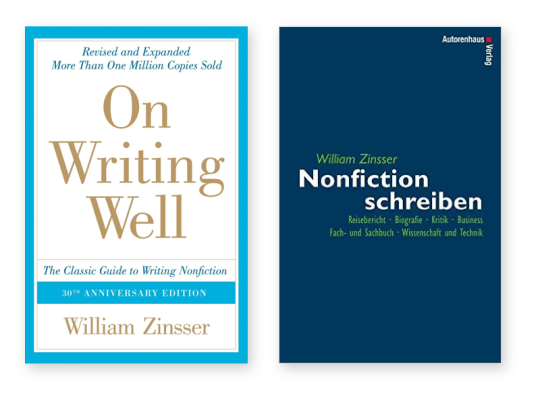
Ein schönes Beispiel dafür, warum ich etwa 80 Prozent der Bücher des vergangenen Jahres auf englisch gelesen habe: Links im Bild die englische Originalausgabe von William Zinssers “On Writing Well” – rechts daneben die deutsche Fassung des Autorenhaus Verlags.

Zinssers vielfach überarbeiteter Ratgeber rund ums Schreiben hing schon seit Monaten auf auf meiner Amazon-Wunschliste. Die Bestellung der englischen Ausgabe hatte im örtlichen Buchladen eine Lieferzeit von zwei Wochen. Natürlich hätte ich einfach auf ›Bestellen‹ in meiner Jackentasche klicken können – aber man will ja den Einzelhandel unterstützen, und so bestellte ich die deutsche Ausgabe, mit dem tristesten Cover, das man sich vorstellen kann. In dem Buch geht es um Persönlichkeit in der Sprache bei Sachtexten! Dabei ist dem deutschen Autorenhaus Verlag wohl die Persönlichkeit der Umschlaggestaltung abhanden gekommen.

March: Technological relations, the world’s oldest social housing complex, and faux marble

image

Since I started cycling to work, my phone usage has gone down about one hour per day. In March, I spent over a full day—roughly 26 hours—on trains. That gave me the chance to catch up on some podcasts and articles I saved within the last weeks.

In context of the Apple/FBI lawsuit, I really enjoyed this story by Loney Abrams called “Larping off the grid”. Set in 2020, where wearable devices are mandatory for every citizen, she explores the idea of disconnecting yourself from constant connection. While just a couple of days ago the FBI claimed to have hacked a terrorist’s locked iPhone (after fighting Apple who refused to create a back door to access the data), the story considers the necessity of hacking yourself OUT of technology, rather than IN to it. Which, I think, is an interesting idea, and I can relate to it: Who doesn’t know the urge of setting the phone to flight mode and hide it in the drawer for a couple of hours, just for some peace and quiet?

Technology is so weird: We created something that stands in a constantly oscillating relation to ourselves. My friend’s parents bought a robotic vacuum cleaner. When I joined them at the dinner table, they were talking about it, about it’s efficiency and noise, how it knows where the stairs are, and how it makes the edges of the carpet uneven. As I missed the beginning of the conversation, I did not realize immediately that we were talking about a machine, not a human.

Later this month: Over easter, I visited my parents in Augsburg. Seven years ago, I could not wait to leave it behind me, but now, with a certain distance (and my parent’s new flat much closer to the city center!), I can see it’s beauty. Augsburg is known for the Fuggerei, the world’s oldest social housing complex, located right in the middle of the old city. People still live there, for 88 cents rent per year, with the requirement to be catholic and to pray three times a day.

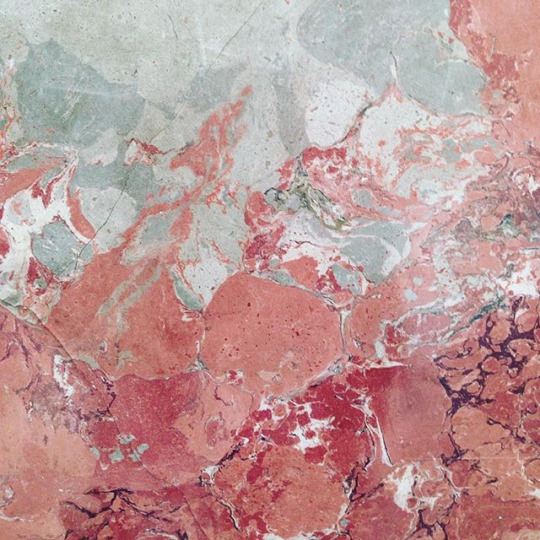
When we visited the Fugger chapel close to the amazing weekly market, I noticed the beautiful walls made out of some sort of “faux marble”. Created with the Scagliola technique, a mixture of minerals, glue and pigments, it features vivid patterns and a shiny surface. The creation process makes the material much more precious than real marble, and that alone is a reason to love it.

I started being more cautious when it comes to surfaces and materials. Working in the digital field, my main fabric are pixels, and there’s not much variety to them. Getting inspired by textures from fashion, paper (remember the paper grain web design trend a couple of years ago?!), and nature helps refreshing the eyes. Nature always helps. Spring is here. Happy April!

By the way: If you enjoy these monthly ramblings, you can sign up to my e-mail newsletter here: Christel’s Corner on Tinyletter. ✨